Raleigh Public Art Strategic Plan
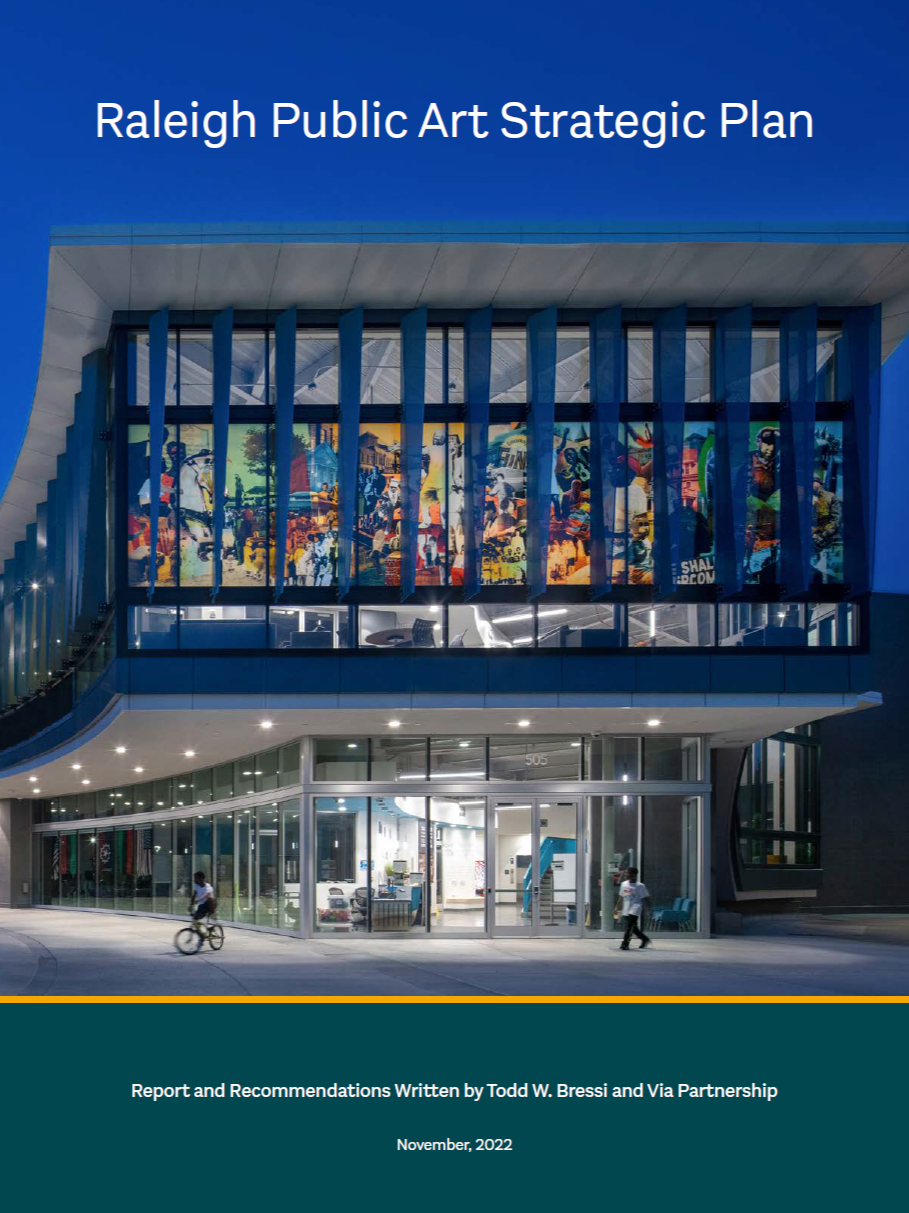
Raleigh’s public art plan helps the city align its public art resources better with community needs and priorities through a focus on strategic actions. It coalesces the program around the goals of distributing public art more widely throughout the city and creating projects that better reflect the city’s creative life and cultural diversity. It also shows how public art resources can benefit the city’s wider creative ecosystem .
Date | 2021-2022
Client | Kelly McChesney, Public Art Director, Raleigh Arts
Collaborators | Via Partnership
Raleigh’s public art program was created more than a decade ago, with a traditional percent for art model. Since then, the program has received consistent and clear support, and key city plans have recommended that the program position itself to address a wider range of opportunities and needs.
Though Raleigh’s new public art plan was crafted during the COVID crisis, more than 1,000 people participated in engagement activities. Their message was that people would like to see public art distributed more widely throughout the city, and more art that reflects the city’s creative life and cultural diversity.
The plan is strategic, outlining six core goals and nearly 100 actions that the program can take to work towards six key goals. It also includes detailed protocols, checklists, and criteria for the staff and PADB to follow in implementing projects and working with other City agencies.
The goals discuss the importance of nurturing Raleigh’s public art ecosystem – everyone who creates, produces, and supports public art; making sure public art authentically representative the creative life of the city; expanding the relationship between City government and the public art program beyond percent for art projects; redirecting resources to communities not well-served by the program; and providing guidance on power-sharing in decisions about what projects to take on and how todo them.
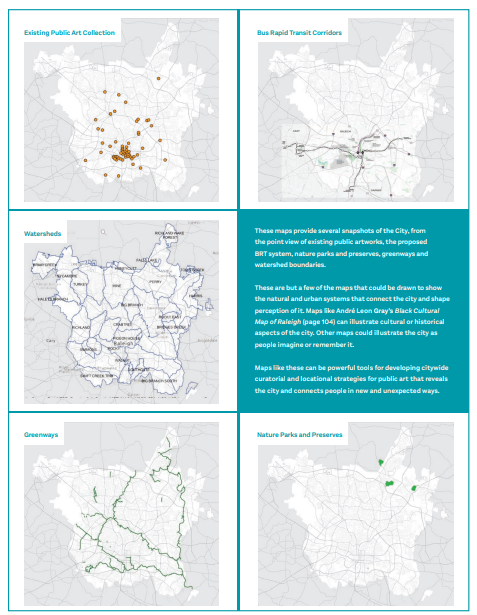
Finally, while the plan doesn’t specifically indicate where new public art projects should be located, it does propose a transformative paradigm for identifying projects. The plan explains how public art can be inspired by new and creative ways of looking at cities, related to how culture, history, environment, and sustaining infrastructure are understood and experienced. These ways of seeing can be visualized through maps that identify new possibilities for public art to connect to the foundational ideas – as well as more people in more communities.
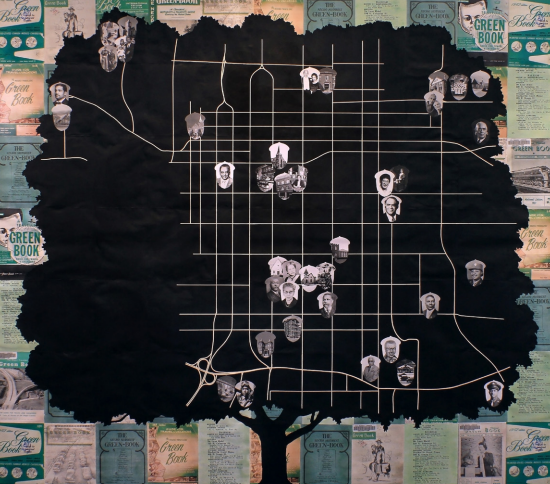
The planning team commissioned artist André Leon Gray to create a map of how Black history could create a new map for interpretive history projects.