Maryland Purple Line Light Rail
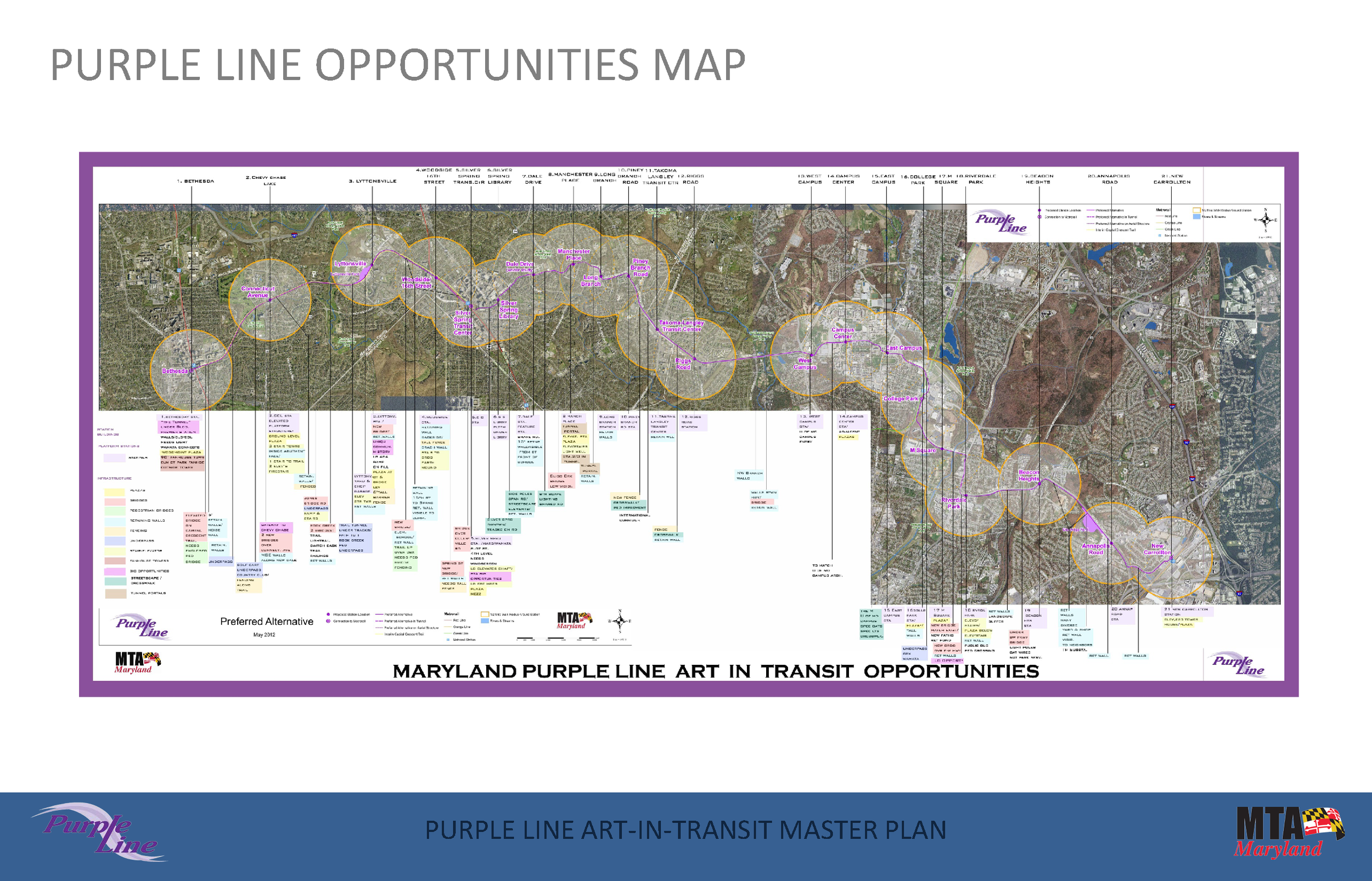
The Purple Line public art master plan and handbook outline a vision and implementation plan for public art along a new light-rail line that threads through highly developed areas in suburban Maryland.
Date | 2015
Client | Maryland Transportation Administration
Collaborators | Jacobs Engineering
Bressi was the lead public art planner on a multidisciplinary team that prepared a public art framework for the new Purple Line light rail connection in the Maryland suburbs of Washington, D.C. The framework was completed in 2015 and incorporated into the design, build, construct, and operate contract that the Maryland Transportation Administration issued. The line is expected to open in 2027.
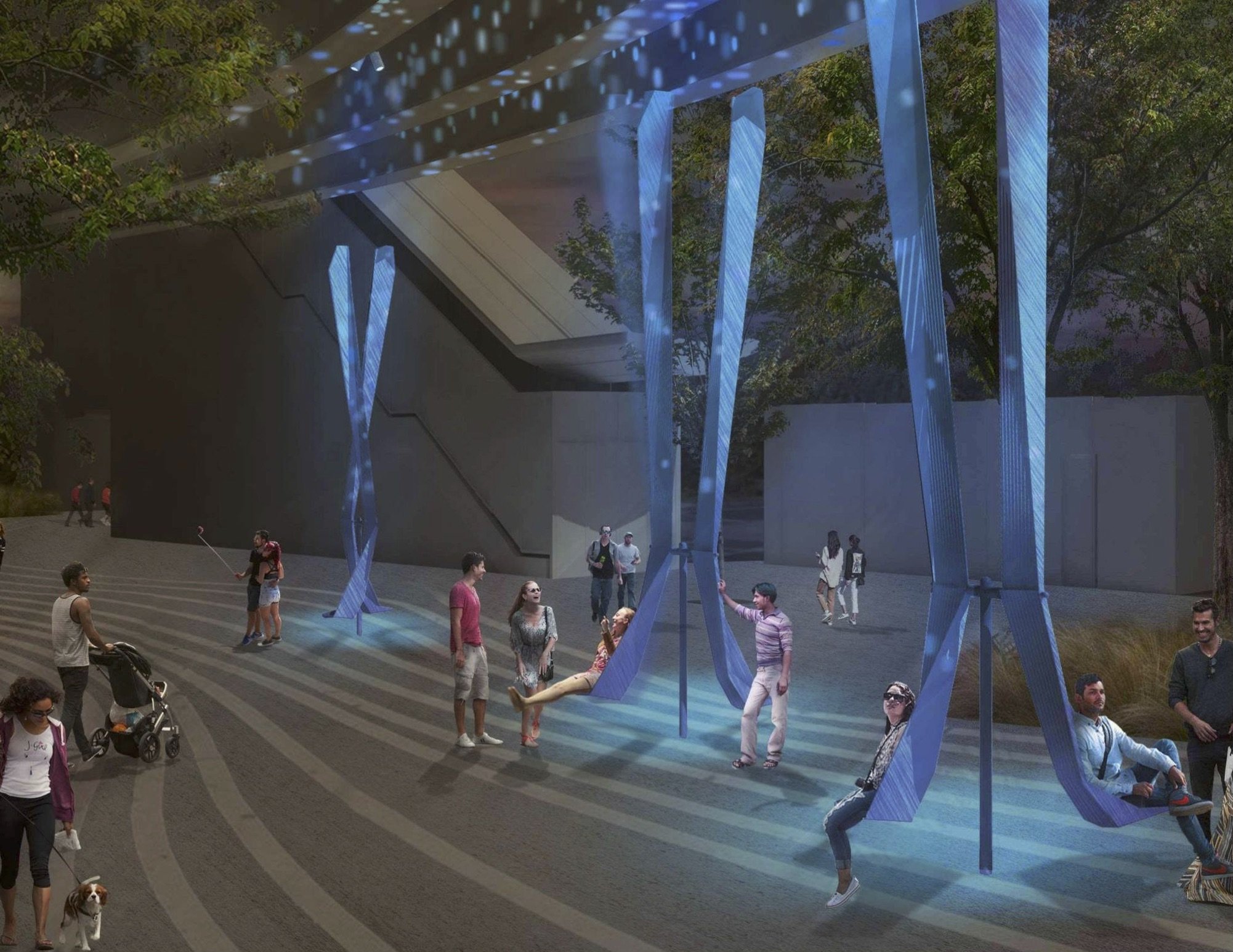
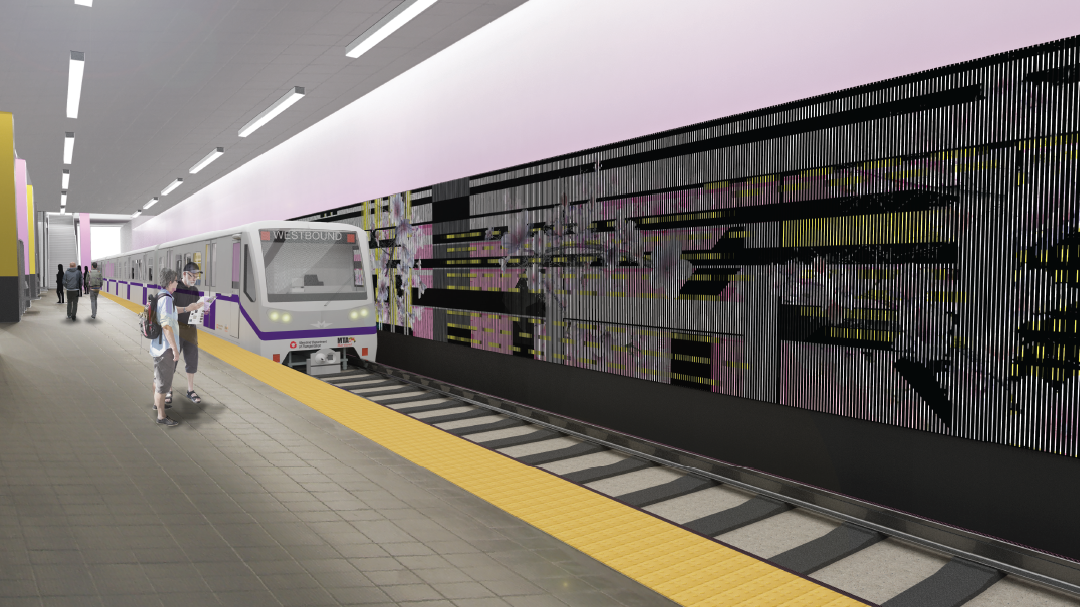
The planning team, led by Jacobs engineering, envisioned a suite of public art projects at each of the 21 stations along the 16-mile-long line. The projects are loosely organized around the theme of a journey, recognizing that the Purple Line, as a rare circumferential route, creates new connections and linkages.
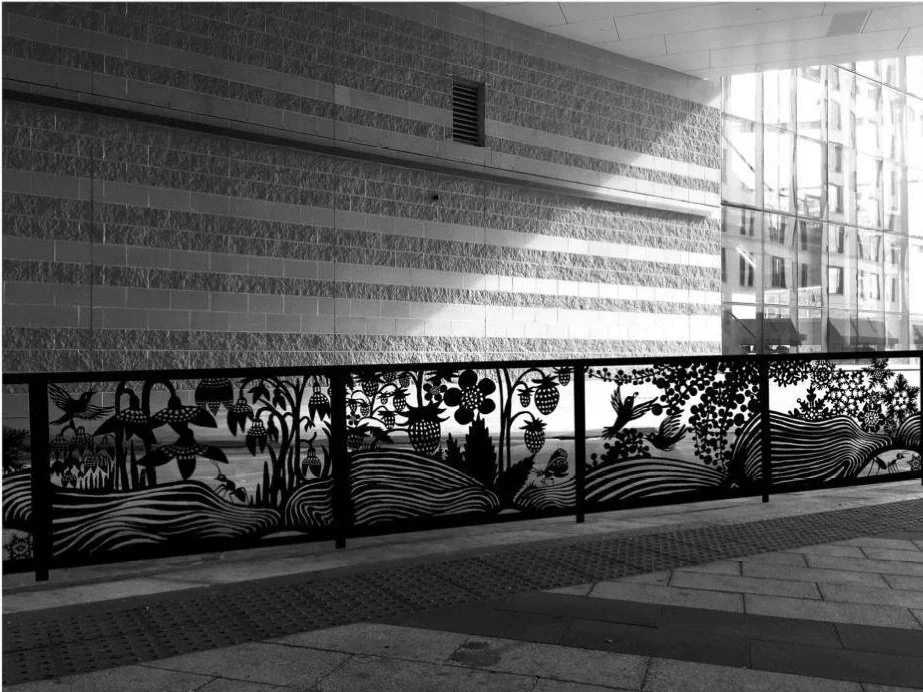
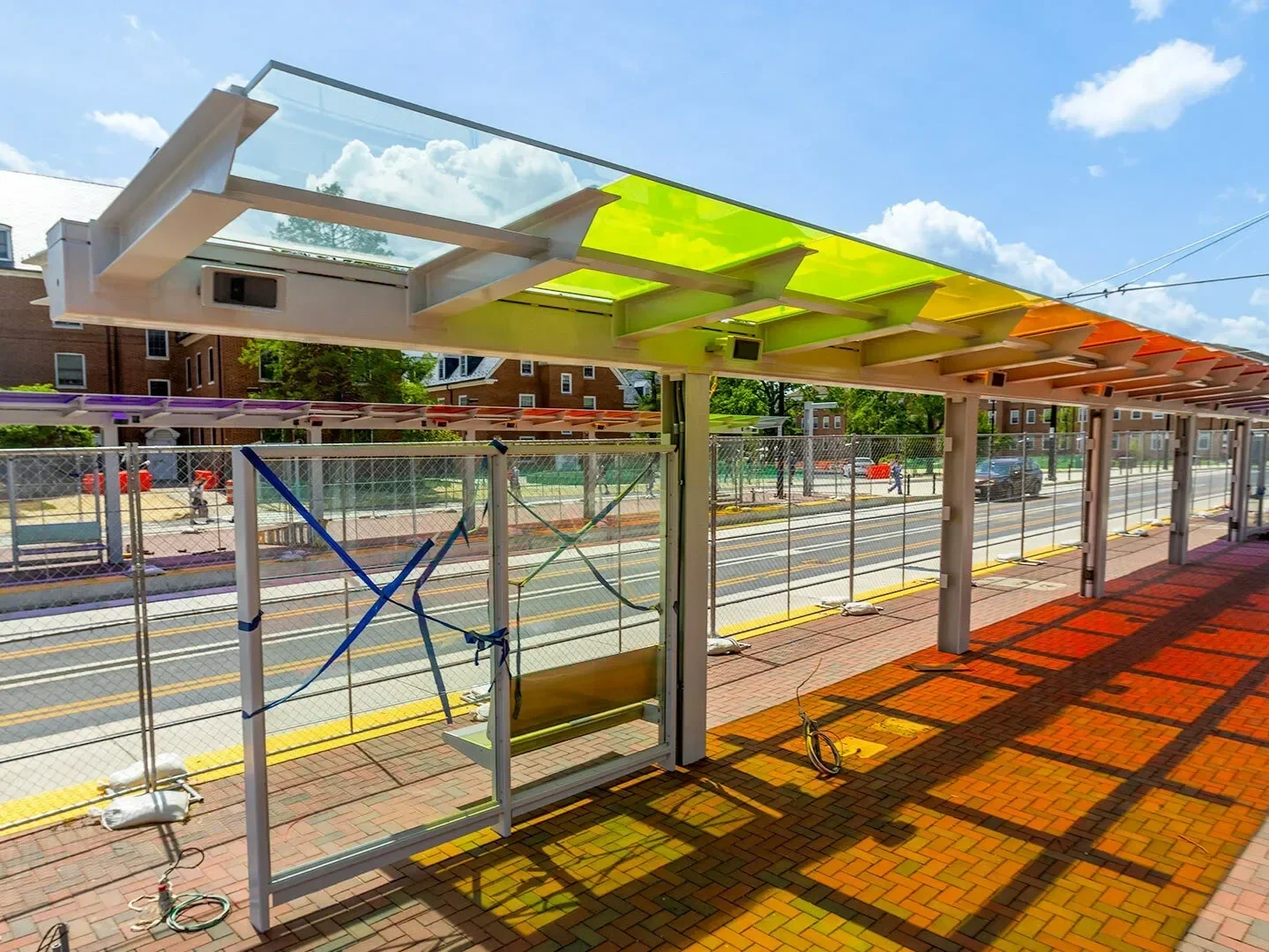
The projects are divided into typologies that facilitate integration into the design and construction, and also address FTA requirements for how public art could be funded. The typologies also reflect a range of public art approaches and complexities, making opportunities available to artists who work in a variety of media and at a variety of experience levels.
The planning team prepared the following tools for the contractor:
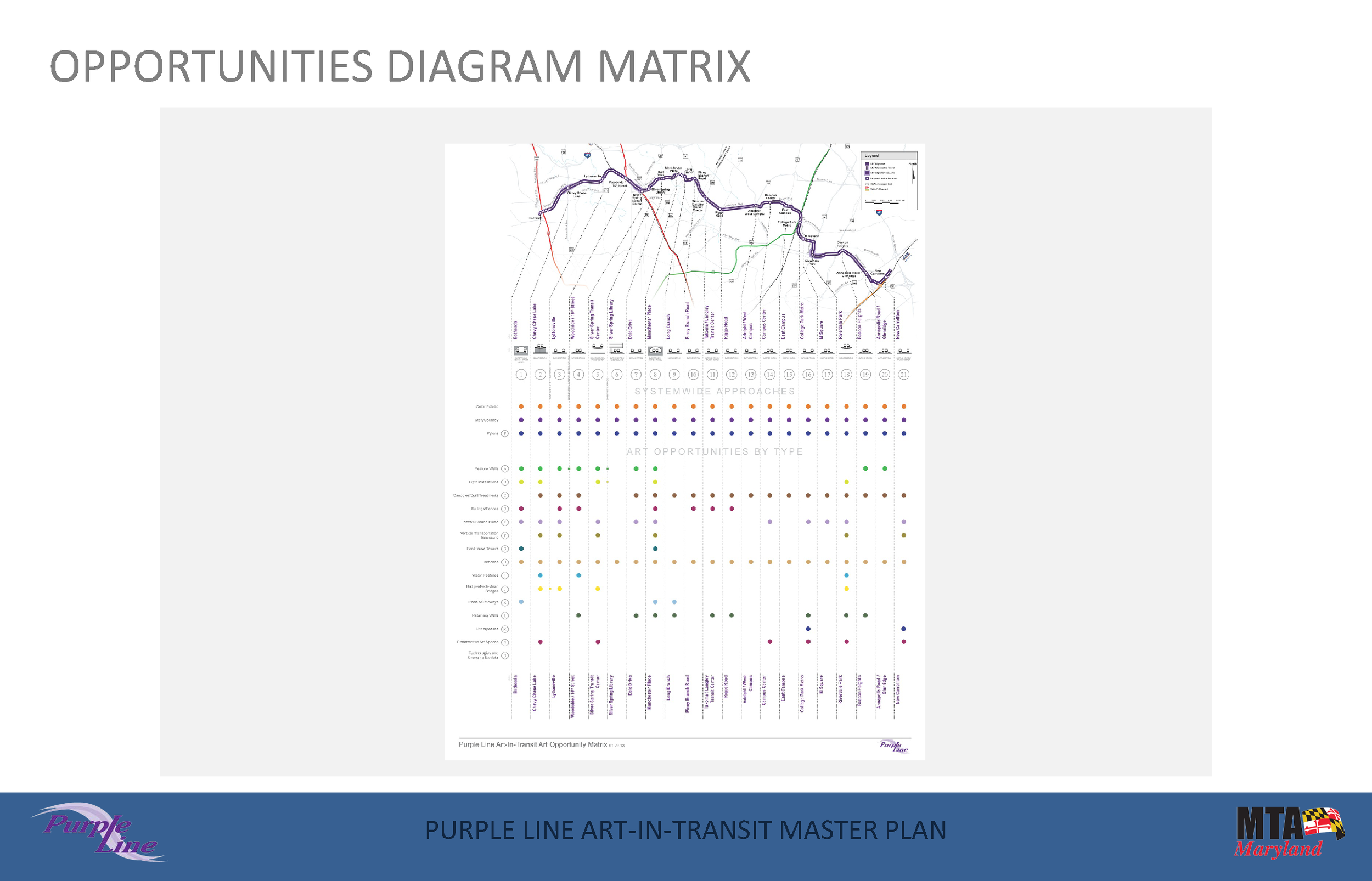
A master plan of potential opportunities for public art along the light-rail line, with both a system-wide and station-by-station strategy. The projects were selected to be consistent with the public art approach of MAP-21, the federal transportation funding program, which permits funds to be used on the artistic enhancement of transportation infrastructure, but not to be used on stand-alone public art commissions.
An Implementation Plan for issuing RFQs and RFPs for the various projects.
A Public Art Handbook, including recommended implementation guidelines based on public art best practices and considerations specific to the Purple Line Art-in-Transit program.
A pool of artists who were pre-qualified to be considered for artistic enhancement projects. To create this pool, the planning team issued a national open call and convened a panel that narrowed 730 submissions to 95 finalists.
Though the plan and handbook were completed in 2015, the line is still under construction, and projects are currently being implement