Kyle Public Art Master Plan
The City of Kyle, historically a ranching town south of Austin, is growing rapidly and sought a plan for future public art projects and standard processes for managing them. The plan delivered a vision for the impact public art could have in Kyle, processes for including public art in capital projects and economic development initiatives, a process for cultivating community projects, and recommendations for incentivizing public art in private development.
Date | 2026
Client | City of Kyle
Collaborators | Jo Davis
Kyle, about 15 miles southwest of Austin, is at a pivotal time in its history – rapidly evolving from a rural railroad town to a suburban community to a regional urban center with a diverse economy.
Like many other rural communities that are undergoing this transformation, Kyle is focused on its identity -- a desire to hold on to the stories about the city’s past, create a good life for the people who are there today, and build a future that will nurture Kyle’s vibrancy. With a considerable number of infrastructure and economic development investments in the works, Kyle asked Bressi to develop a plan that would identify, prioritize, and guide future public art projects in Kyle.
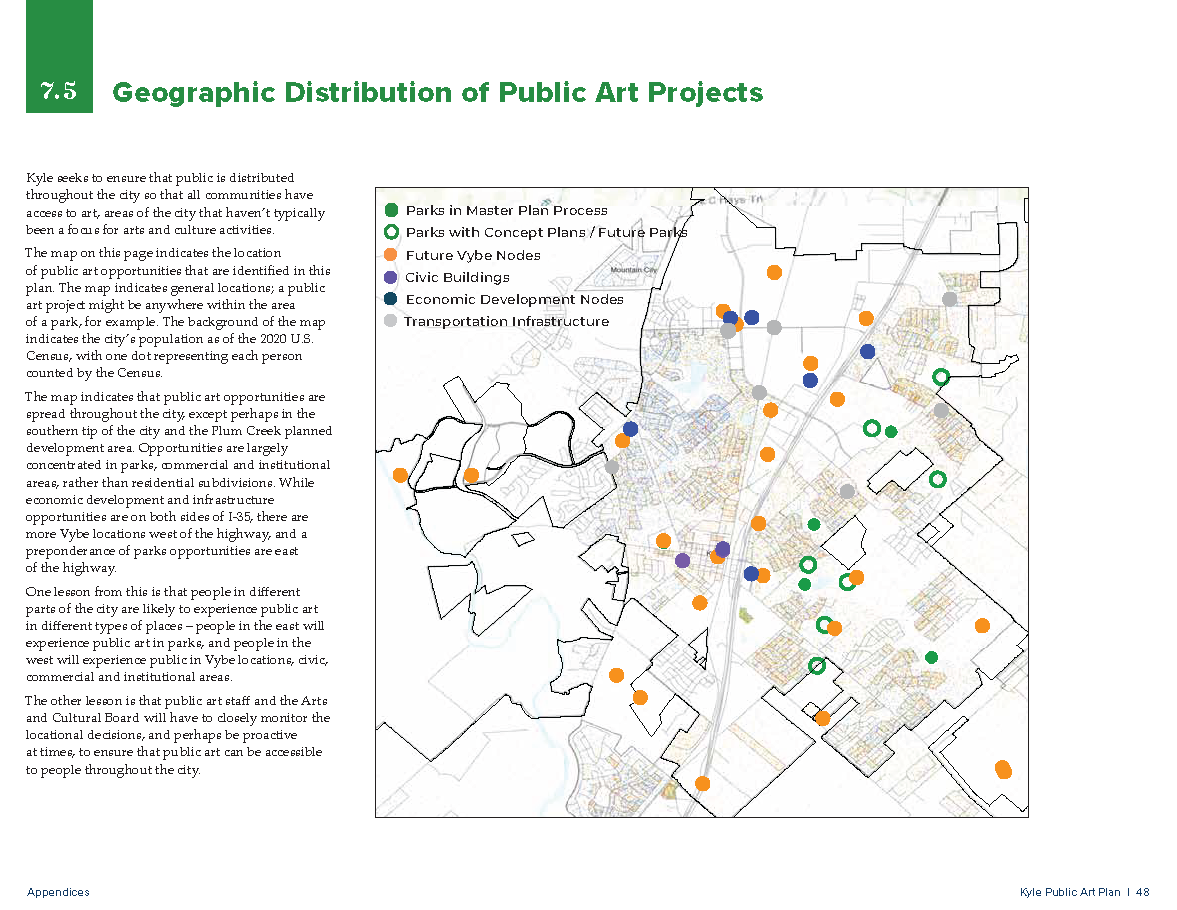
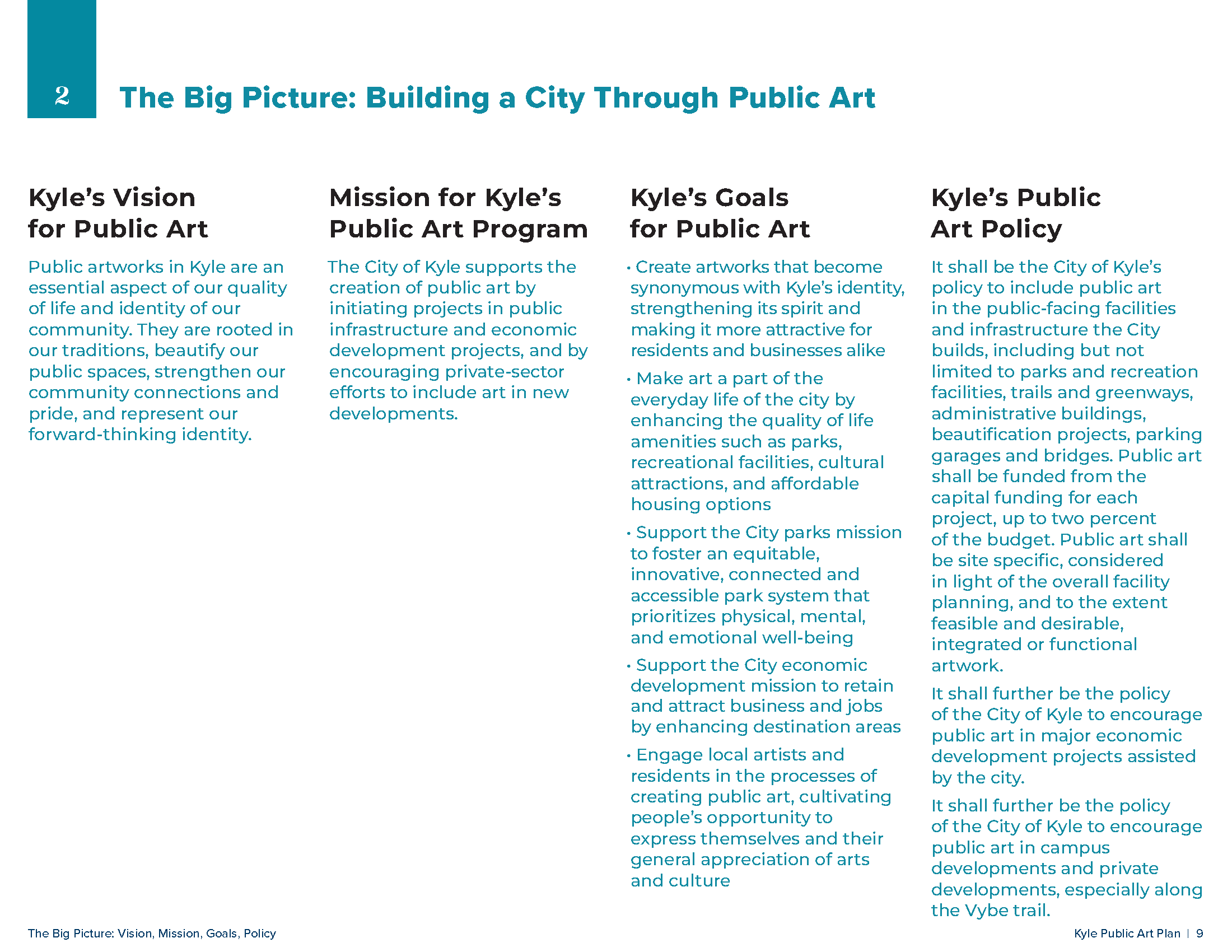
Kyle’s plan, approved by City Council in April 2026, maps out three paths for the City to follow – include public art in the parks, public facilities, and transportation infrastructure the City builds; integrate public art into economic development strategies for destination areas, key facilities, and focus industries; and support projects that tap into the community’s creative life. The plan outlines planning, funding, and decision-making strategies for each of those paths.
The plan demonstrates how public art can be part of what conveys Kyle’s identity, what helps beautify the city, and what helps Kyle tell its story to itself and to the world at large. It demonstrates how public art can i create anchors in a rapidly changing city, to support the quality of life of Kyle’s communities, and to attract further development to the city.
In presenting the plan to Council, Bressi noted, “Even though there are hard decisions and challenges, public art can be a binding force. It can ground the city in its past, present and future. It can connect people across generations and across neighborhoods. It can reflect the best of Kyle’s traditions, its desire for connections and forward thinking.”